


2026 Harriet Powers Forever Stamps

About This Stamp
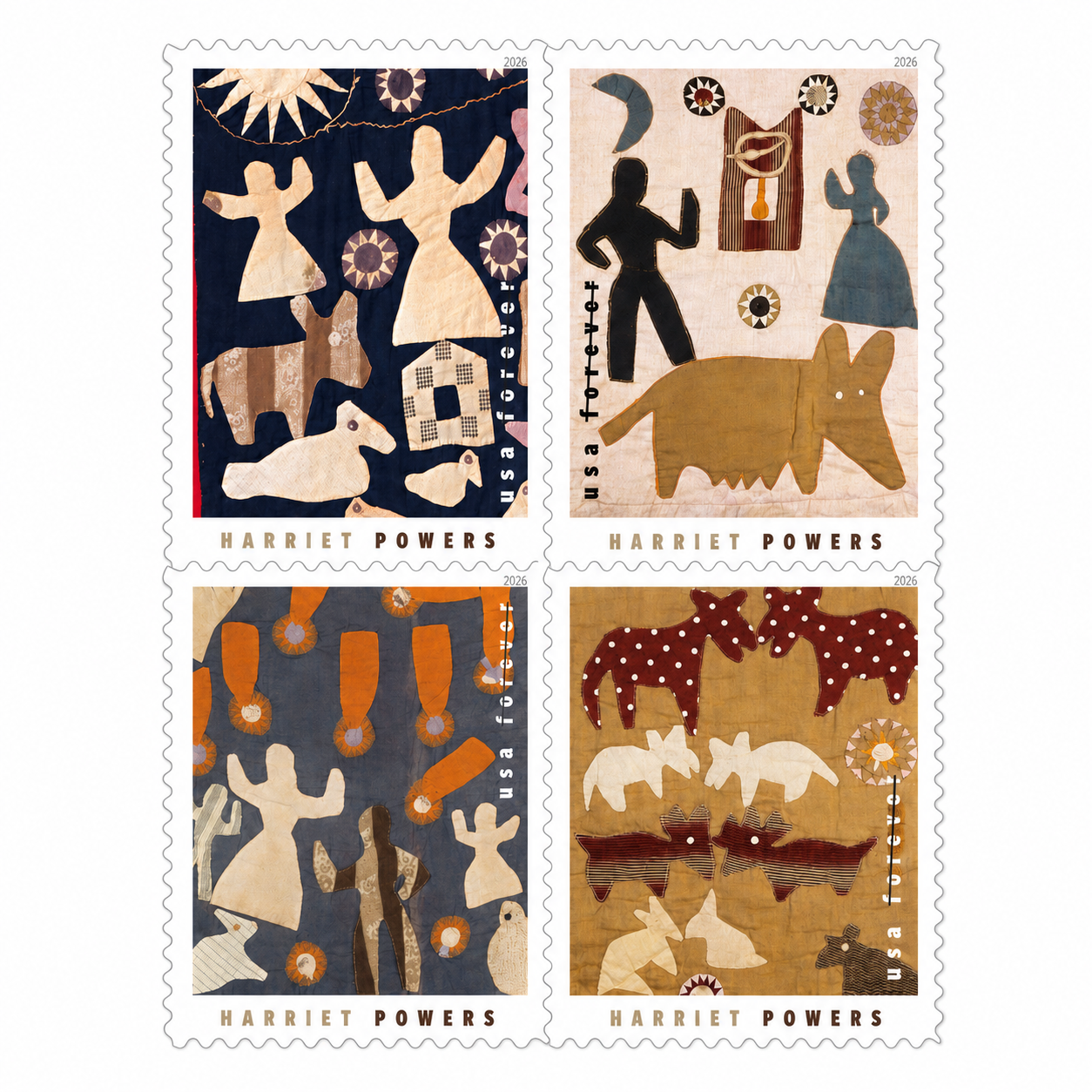
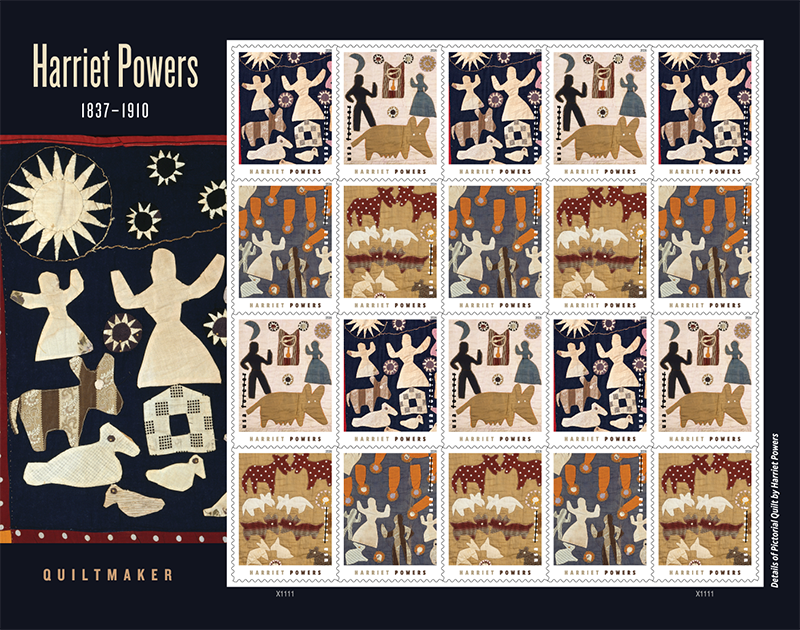
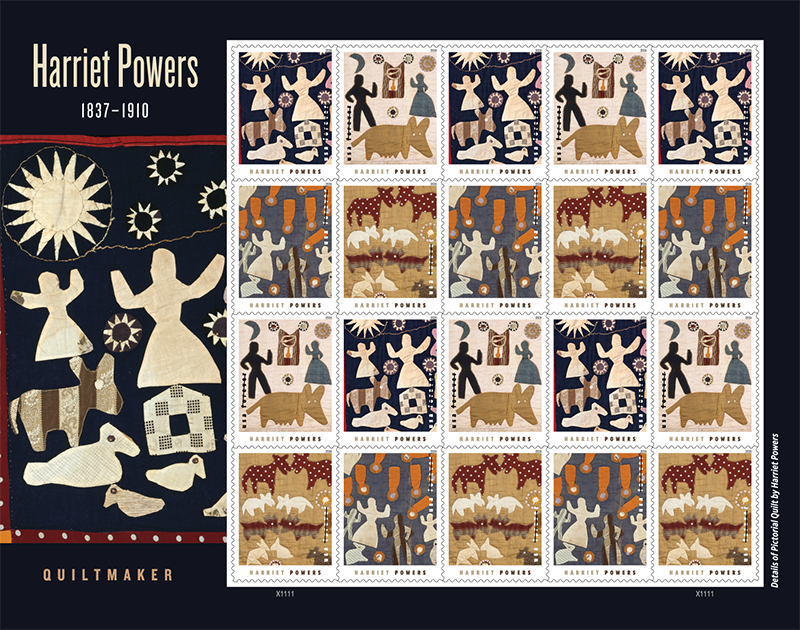
Four new stamps honor quiltmaker Harriet Powers (1837–1910), a formerly enslaved woman who stitched works that are celebrated as masterpieces of American folk art and storytelling. Just two of her quilts are known to survive.
Born October 29, 1837, on a plantation near Athens, Georgia, the future quilter is believed to have learned to sew as a child. At 18, she married Armstead Powers, an enslaved farmhand. Eventually they would have nine children. After Emancipation, they bought four acres nearby in Sandy Creek, Georgia, where they raised cotton and vegetables.
Along the way, Harriet Powers began creating quilts, and completed at least five. The two we know are referred to as story quilts because each of their panels features a pieced, appliquéd, and embroidered scene from a familiar story drawn from local lore or the Bible.
In 1886, Powers entered her “Bible Quilt” in a local fair, most likely the second annual Northeast Georgia Fair, in Athens. There, a young white art teacher named Jennie Smith fell in love with it and tried to purchase it. Powers turned her down but ended up selling it to her a few years later. After Smith displayed the quilt in the Negro Building of the 1895 Cotton States and International Exposition in Atlanta, several Atlanta University faculty wives were so impressed they decided to commission a new quilt from Powers as a gift for the vice president of the university board, Dr. Charles Cuthbert Hall. The “Pictorial Quilt,” completed in 1898, remained in the Hall family for 62 years.
Art director Derry Noyes had worked on previous stamps featuring quilts but never thought of these works of fabric art as canvases for telling stories. “This is what is extraordinary about Harriet Powers’s quilts,” she says. Noyes chose details that would hold up well at stamp size and still communicate the stories Powers was trying to tell: “I was also looking for variety and color combinations that worked well together.”
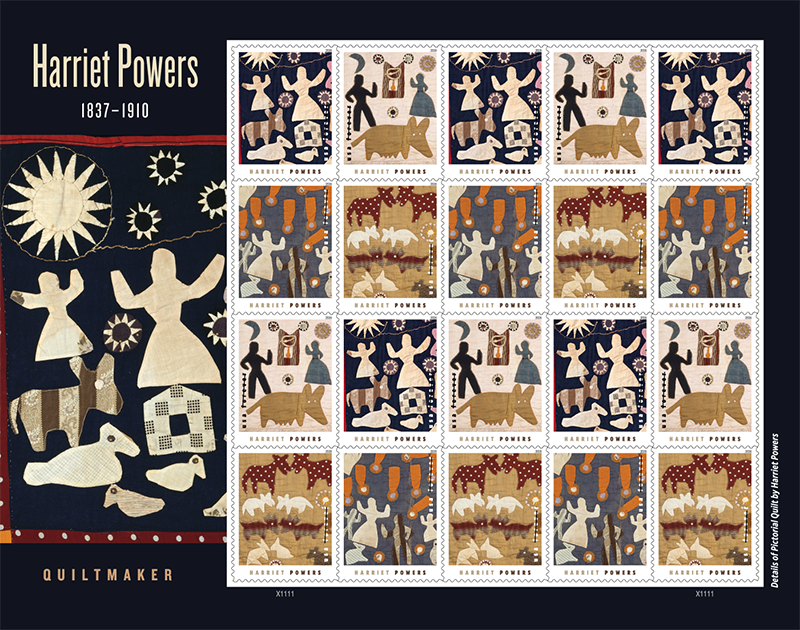
Each of the four stamps in the pane of 20 features a panel selected from Powers’s “Pictorial Quilt.” Explaining how she arranged the panels, Noyes says: “I wanted the pane to look as if there were more than just four different scenes. By changing the starting order at the beginning of each row I was able to create the impression of a multitude of scenes.”
Noyes designed the stamps and pane using existing photographs of the Pictorial Quilt, 1895–1898, by Harriet Powers. (Bequest of Maxim Karolik 64.619. Photograph © Museum of Fine Arts, Boston.)
Powers’s other extant work, the “Bible Quilt,” now belongs to the Smithsonian National Museum of American History. The donor shipped it to the museum in 1968 through the U.S. Mail.
The Harriet Powers stamps are being issued as Forever® stamps. These Forever stamps will always be equal to the current First-Class Mail® one-ounce price.
Pictorial quilt, 1895–98, by Harriet Powers. Bequest of Maxim Karolik 64.619. Photograph © 2025 Museum of Fine Arts, Boston.





Frequently Asked Questions
How it works?
A Forever® stamp is for sending domestic mail weighing up to 1 oz via First-Class Mail®.
Purpose: Send letters and cards up to 1 oz (approximately 4 sheets of regular, 8-1/2" x 11" paper in a rectangular envelope)
within the U.S., including U.S. territories and military bases overseas.
Value: Always valid for the First-Class Mail 1 oz rate, even if postage rates increase. Visit First-Class Mail and Postage to view
current rates.
Other Uses: Pair this stamp’s value with other postage to meet mailing costs when additional postage is required.
Use the Retail Postage Calculator to determine the exact cost of your mail.
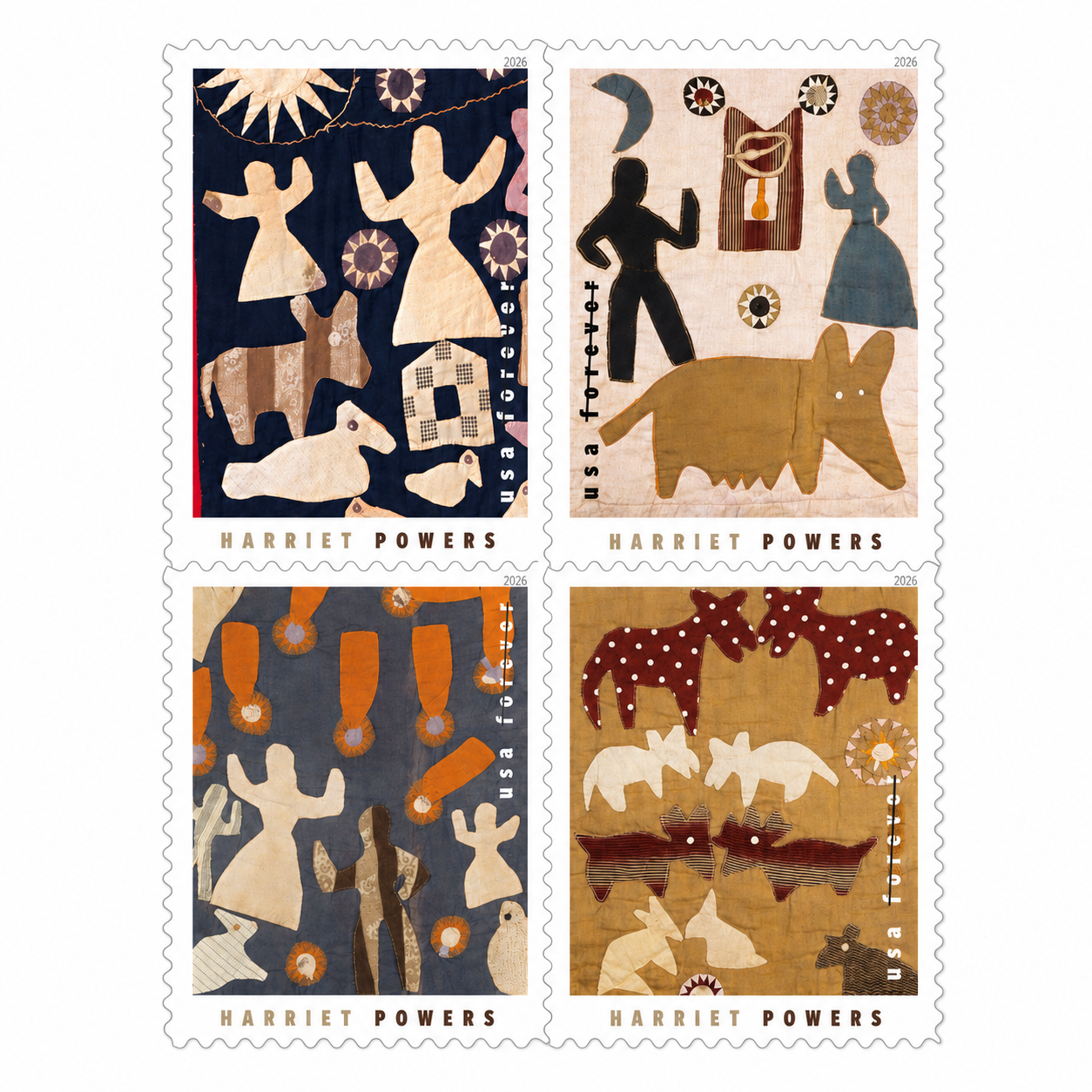
Why is "FOREVER" crossed out in the image?
So the lines in your picture:
- It does not mean that the stamp has expired;
- It does not mean that you cannot continue to use it;
- Nor a postmark;
- It's just an artificial anti-copying line added to the display image.
Note: If the physical stamp you receive actually has this crossed line printed on it, be cautious. It may be a display sample, a replica or a fake stamp, rather than a normal usable stamp.
What are the common types of stamps, and how do they differ?
- Forever Stamp: Valid for standard domestic letters within the U.S. These stamps typically do not bear a fixed face value; they remain valid for mailing a standard one-ounce letter at the current rate, even if postage prices increase in the future.
- Global Forever Stamp: Primarily used for standard international letters or postcards sent from the U.S. to other countries. The main difference between this and a standard Forever Stamp lies in its scope of use and postage value.
- Postcard Stamp: Designed specifically for domestic postcards that meet USPS size standards; the postage rate is typically lower than that for standard letters.
- Additional Ounce Stamp: Used to cover the cost of weight exceeding the first ounce; these are usually used in conjunction with a Forever Stamp or other stamps.
- Two-Ounce and Three-Ounce Stamps: Suitable for heavier letters, greeting cards, wedding invitations, or multi-page documents, eliminating the need to combine multiple stamps to cover the required postage.
- Fixed-Value Stamps: These stamps display a specific monetary value (e.g., 1¢, 5¢, or other amounts) and are primarily used to make up postage differences or in combination with other stamps.
- Commemorative and Thematic Stamps: Typically issued to mark historical events, cultural or artistic themes, holidays, notable figures, animals, or natural landscapes. While suitable for regular mail, these stamps are also popular among collectors due to their unique designs and limited release periods.
It is important to note that a stamp's theme and its postage class can overlap; for example, a holiday-themed stamp might also be a Forever Stamp. When purchasing, check for markings such as FOREVER, GLOBAL, POSTCARD, ADDITIONAL OUNCE, or a specific face value to confirm the stamp's intended use.
Why choose StampResale.com?
- At StampResale, you will find a diverse range of U.S. stamps—including classic Forever Stamps, holiday-themed issues, commemorative stamps, and specialty collections—catering to needs ranging from everyday mailing and gift-giving to serious collecting.
We also frequently offer limited-time discounts, bundle deals, and exclusive promotions, providing you with a wider selection and greater value while guaranteeing the authenticity and quality of our stamps.
MAYBE YOU LIKE THESE
-
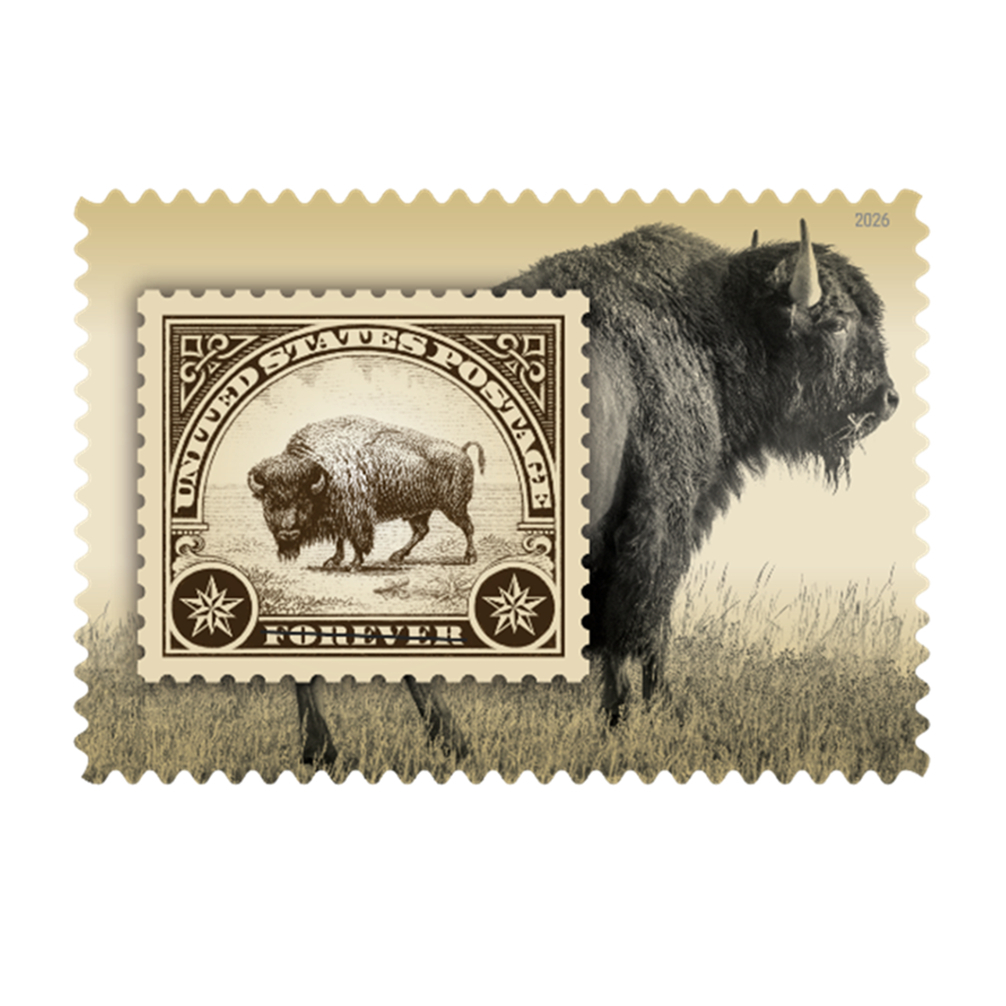
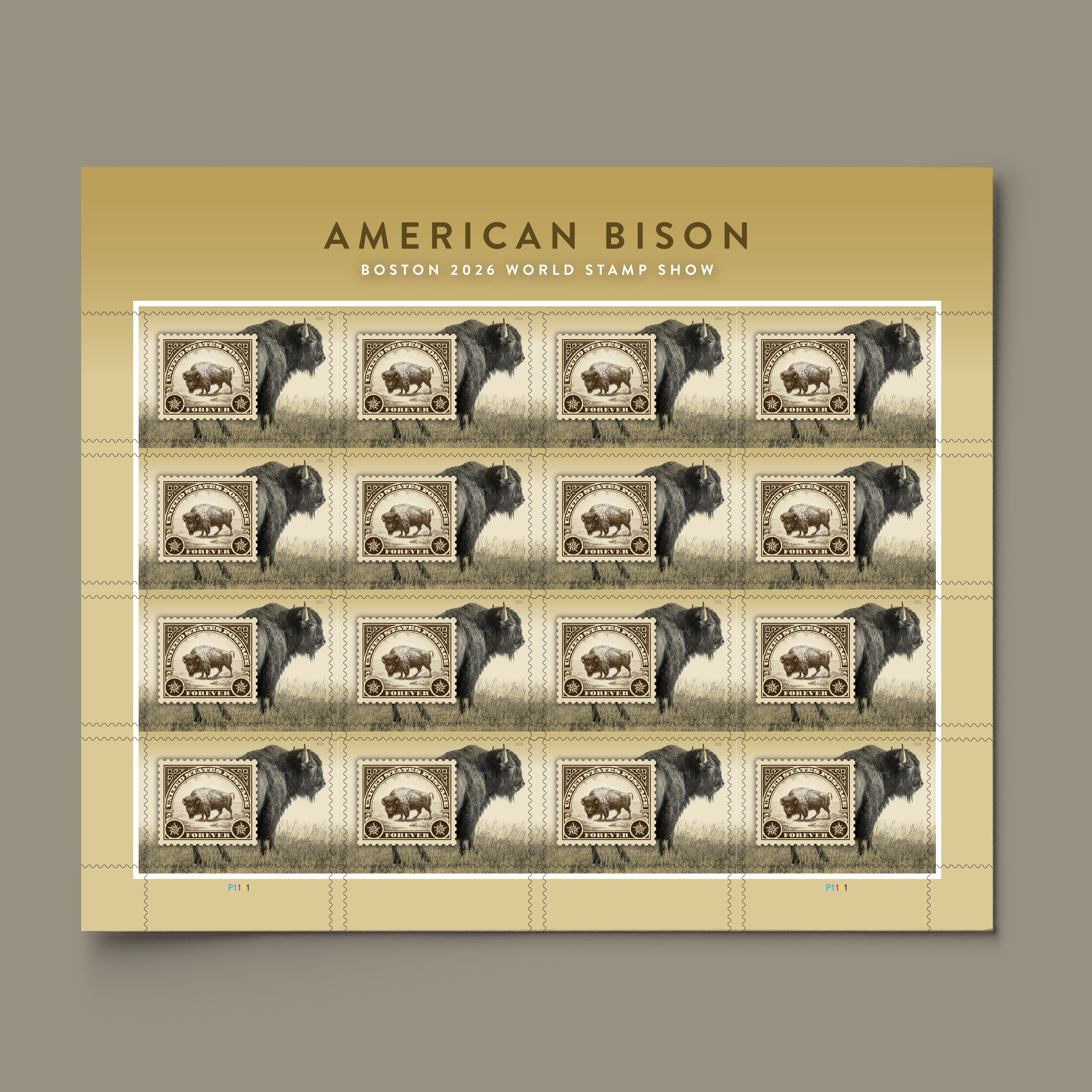
2026 American Bison First-Class Forever Stamp
2026 American Bison First-Class Forever Stamp
$7.99 USD $14.30 USD